
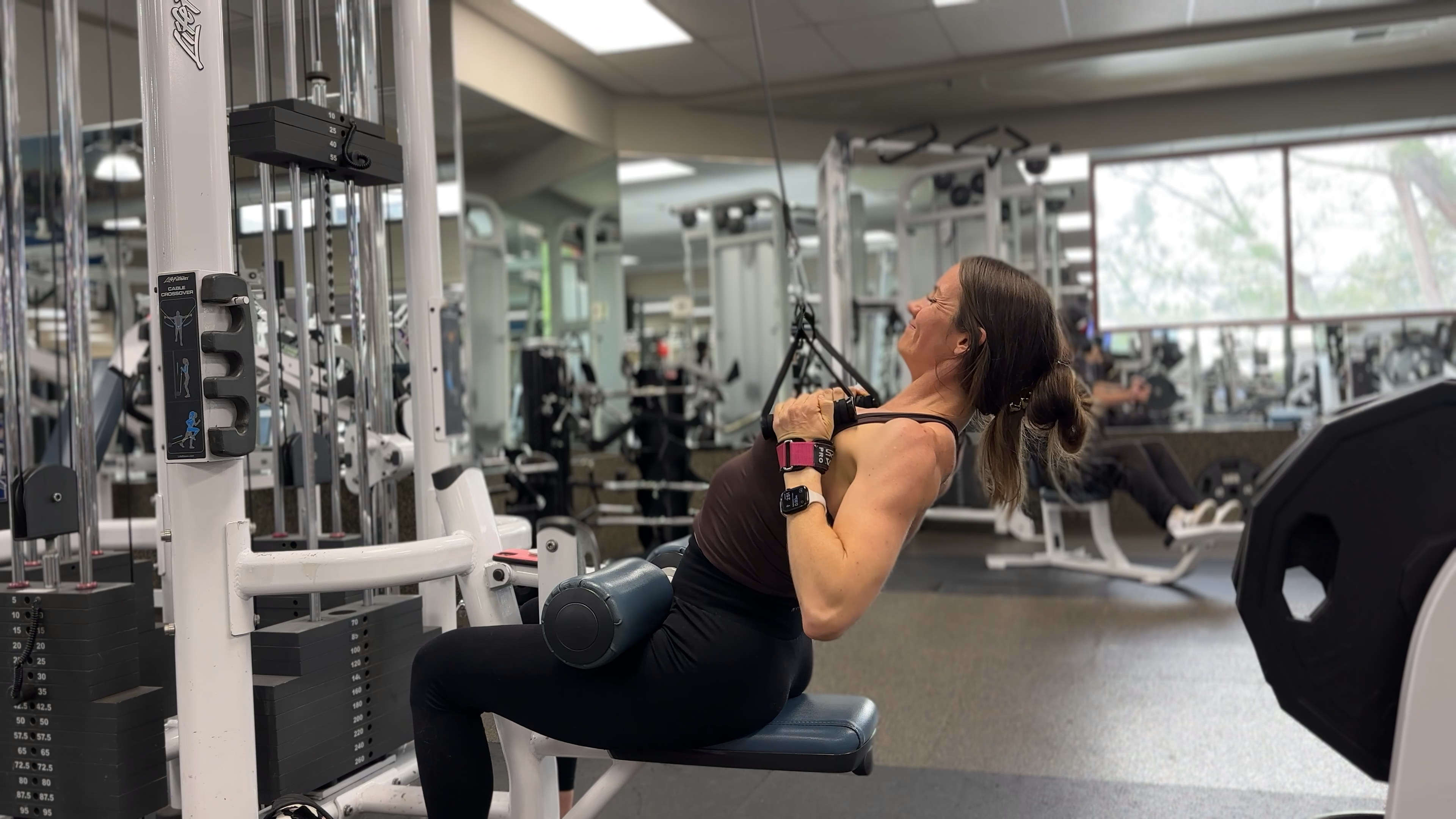
5 Ways to Know If You're Training Hard Enough to Build Muscle
Wondering if you're training hard enough to build muscle? Learn 5 ways to evaluate your workout intensity, understand reps in reserve, improve your form, and use progressive overload to build a stronger, more defined physique.
5 Ways to Know If You're Training Hard Enough to Build Muscle
If you've been consistently showing up to the gym, following your workouts, and completing all your sets and reps, but you're still not seeing the muscle growth or definition you're working toward, you might be wondering: Am I actually training hard enough?
It's a question I hear all the time as a strength and nutrition coach.
There's a difference between simply completing a workout and training to actually build muscle.
Training harder doesn't necessarily mean sweating more, feeling sore for days, or leaving the gym completely exhausted.
When your goal is to build muscle, what matters is how effectively you're challenging your muscles during your working sets, particularly how close you're getting to muscular failure.
But how do you actually know if you're pushing yourself hard enough without overdoing it?
Whether you're relatively new to strength training or you've been lifting for years, learning to evaluate your training intensity is one of the most valuable skills you can develop.
Here are five practical ways to tell if you're training hard enough to build muscle and make the most of the time you're already spending in the gym.
The next time you're in the gym, use this simple checklist to evaluate the intensity and effectiveness of your working sets.
1. Are Your Last Few Reps Getting Harder?
Pay attention to how the final reps of each set feel.
Are they noticeably more challenging than your first few reps?
Does the weight begin to move slower even though you're maintaining a consistent technique and effort?
If every rep feels relatively easy and you're moving the weight at the same speed throughout the entire set, you very likely have had more reps left in the tank.
Rep speed isn't the only indicator of proximity to failure, but it can be a REALLY helpful cue.
2. Is Your Target Muscle Actually Being Challenged?
Think about which muscle you're trying to train.
If you're performing RDLs, are your hamstrings feeling fatigued? or your back?
If you're doing rows, is your back the limiting factor? or your biceps/grip?
If you're doing lateral raises, are your delt working hard to complete the last few reps? or is it your traps?
Other muscles and your overall conditioning will naturally contribute to most exercises, but understanding what's limiting each set can help you determine whether you're effectively training the muscles you want to develop.
3. How Many More Reps Could You Have Completed?
Could you have completed one more rep? Two or three?
Or could you have easily completed another five or six?
If you consistently finish sets with significantly more reps left in the tank from MUSCULAR failure, you very likely need to adjust your training intensity.
➡️ read this post to understand muscular failure vs other types of failure
That could mean increasing the weight, performing more reps, or improving how you execute the exercise.
4. Did Your Form Improve?
Progressive overload isn't just about lifting heavier weights or completing more reps. Improving your exercise technique is also a form of progress.
Think about how you're performing your exercises now compared to a few weeks or months ago.
Are you able to complete the same reps with better control?
Are you using a fuller range of motion?
Are you maintaining better stability and positioning throughout each set?
For example, maybe you were previously performing Romanian deadlifts with 30-pound dumbbells but struggling to control the lowering portion of the movement.
Now, you're lifting those same 30-pound dumbbells with better control, a consistent range of motion, and more tension on your hamstrings.
Even though the weight hasn't changed, you're improving the quality of your reps and increasing the challenge placed on the muscles you're trying to develop. That's meaningful progress!
Progressive overload is about gradually increasing the demands placed on your muscles over time, and improving your technique can help you accomplish that without having to adding more weight.
For all the different ways you can progressive overload without adding weight or wrecking your form, check out this video!
5. Are You Tracking Your Progress?
This is one of the most overlooked parts of effective strength training.
If you're not recording your workouts, how do you know whether you're actually getting stronger?
Are you lifting more weight than you were three months ago?
Can you complete more reps using the same weight?
Are you performing exercises with better control or a greater range of motion?
These are all signs of progress, and they're closely connected to one of the most important principles of building muscle: progressive overload.
The Bottom Line: How Hard Should You Train to Build Muscle?
If your goal is to build muscle and achieve a stronger, more defined physique, learning how to train close to muscular failure is an important skill.
But effective strength training isn't about making every workout as exhausting as possible.
Your focus point (if your goal is muscle growth) should be on challenging your muscles with enough intensity to stimulate growth while maintaining proper technique and managing your recovery.
Here are the most important things to remember:
Muscular failure means you can no longer complete another full repetition despite giving your maximum effort.
Technical failure means you can no longer complete another repetition with appropriate technique.
Your final reps will often naturally slow down as your muscles approach failure, but your form should remain controlled.
Approximately 1–3 reps in reserve is a practical starting point for many muscle-building working sets, although the ideal effort varies by exercise and training program.
Progressive overload matters. Track your workouts and aim to gradually improve your performance over time.
And remember, your strength training is only one piece of the equation.
Your nutrition, recovery, and overall training consistency also play important roles in building muscle and changing your body composition.
When all of those pieces work together, you can stop guessing whether your workouts are effective and start following a plan that actually moves you toward your goals.
Frequently asked questions
Ready for a plan that fits your life?
Choose self-guided training, join group coaching, or work with Coach Kales 1:1.
Start TodayRelated articles

How to Do a Bent-Over Cable Lat Pullover
Triceps burning before your lats? Here's how to set up the bent-over cable pullover so your lats do the work.

How to Do a Lat-Biased Single-Arm Cable Row
Feeling rows in your traps or arms? Here's how to set up the single-arm seated cable row so your lats do the work.

What Does Training to Failure
Feeling tired and sweaty isn't the same as training close to failure. Coach Kales breaks down the three types of failure, a simple rep-speed check, and how hard your sets actually need to be to build muscle.