
What Does Training to Failure Actually Mean?
Sweaty and tired isn't the same as close to failure. Learn the three types of failure, the rep-speed check, and how close you really need to train to build muscle.

In this video
Your workouts can feel hard without actually building any muscle
A lot of women I coach are showing up, sweating through their leggings and checking the box, but still asking, "Why don't I look like I work out?"
Usually it's because their sets aren't close enough to proper failure to give the muscle a reason to grow.
Training to failure means the muscle you're working can't complete another clean, controlled rep. It doesn't mean you got sweaty, out of breath or "felt the burn".
But for most of your sets, you don't need to go all the way to true failure. Ending most working sets with about 1 to 3 reps left in the tank is the sweet spot for building muscle, without excessive soreness and fatigue building up.
What are the three types of failure?
Muscular failure: the target muscle physically can't finish another rep with good form, even with max effort. On a leg extension, your quads stall halfway up and the rep turns into a pause.
Technical failure: you could move the weight again, but only by cheating: throwing your hips, swinging, shortening the range of motion. For most people, and especially on big compound lifts, this is the smart place to stop.
Cardio (systemic) failure: your lungs or heart rate give out before the muscle does. If you stop squats gasping for air but your glutes and quads had more in them, that's conditioning limiting the set, not your muscles.
For muscle growth, we want the target muscle to be the limiter. Not your lungs, not your grip, not your low back.
How can you tell if you're close to failure?
Watch your rep speed. Your first reps should be smooth and controlled. As the muscle fatigues, the lifting part of the rep naturally slows down.
Every rep the same speed from rep 1 to rep 12? You had more in the tank.
Last few reps slow down but form stays solid? You're close.
Form falls apart? You went too far.
Slower doesn't mean uglier, and it doesn't mean lifting in slow motion on purpose from rep one. The slowdown should happen because the muscle starts to fatigue.
How close to failure should you train?
Aim to end most working sets with about 1 to 3 reps in reserve (RIR). RIR is simply how many more clean reps you could have done. 0 RIR means you couldn't do another clean rep. 2 RIR means you could squeeze out two more slow, hard reps and then you'd be done. Research comparing training to failure with stopping a little short hasn't found a clear muscle-growth advantage for going all the way to failure [2].
Judging this is a skill. Studies show people misjudge how many reps they have left, by about one rep on average, and get more accurate closer to the end of a hard set [1]. You're not bad at lifting. You're just learning to measure effort.
The "Am I close enough to failure?" checklist
Did my last few reps slow down? If not, you probably had more left.
Was my target muscle the limiter? Not my cardio, not my grip.
Could I have done more than 3 clean reps? If yes, add reps or weight next time.
Did my form stay mostly consistent? If it broke down, that's technical failure. Stop there.
Am I tracking my progress? You can't progressively overload what you don't track.
Same workout, same 3 sets of 12, totally different results. Twelve smooth reps you could have kept going on is a very different set from twelve reps where rep 12 is a grind. That's why you don't need longer workouts, just more intentional ones. Log your sets in the BYB app so you know exactly what to beat next time.
References
Halperin I, et al. "Accuracy in Predicting Repetitions to Task Failure in Resistance Exercise: A Scoping Review and Exploratory Meta-analysis." Sports Medicine, 2022. https://doi.org/10.1007/s40279-021-01559-x. People underpredicted their reps left by about one rep on average, and got more accurate closer to failure.
Refalo MC, et al. "Influence of Resistance Training Proximity-to-Failure on Skeletal Muscle Hypertrophy: A Systematic Review with Meta-analysis." Sports Medicine, 2023. https://doi.org/10.1007/s40279-022-01784-y. Found no evidence that training to momentary muscular failure builds more muscle than stopping short of it.
Key takeaways
- Training to failure means the target muscle can't do another clean rep, not that you're sweaty or out of breath.
- When your form breaks down, the set is done. That's technical failure.
- Your last few reps should slow down naturally while your form stays solid.
- End most working sets with about 1 to 3 reps in reserve.
- If you could have done more than 3 clean reps, add reps or weight next time.
- Track your workouts so you know what to beat next time.
 Before
 After
Client result
Built shape and strength
This program has helped me build confidence, get stronger, and accomplish my goals!
Read her story →Questions answered in this video
Up next
All long-form videos →
JOIN THE BYB FITNESS APP
The BYB App
Your training, nutrition, progress and community.
Built to help you stay consistent and see real results.
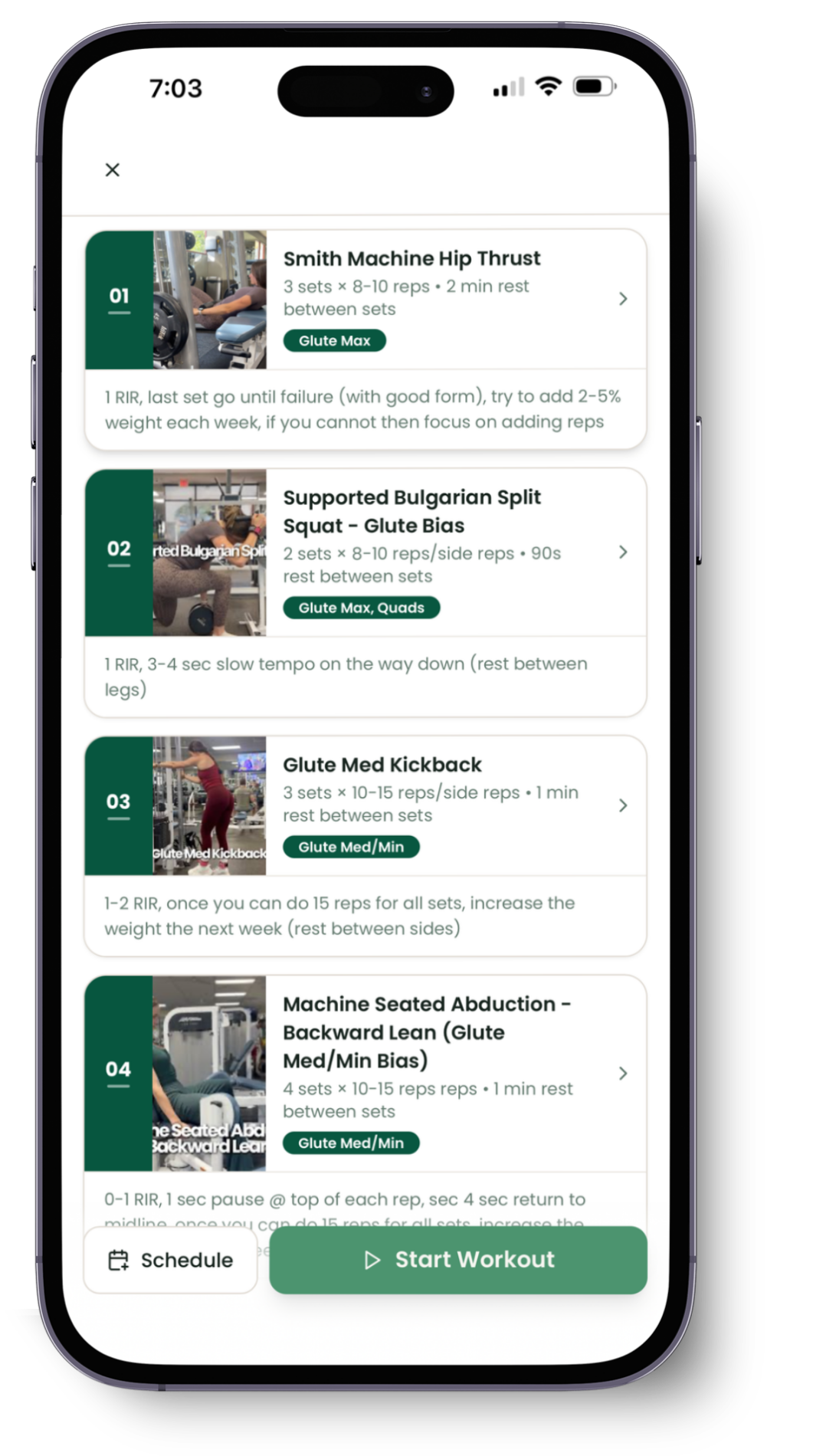
- Follow your training plan
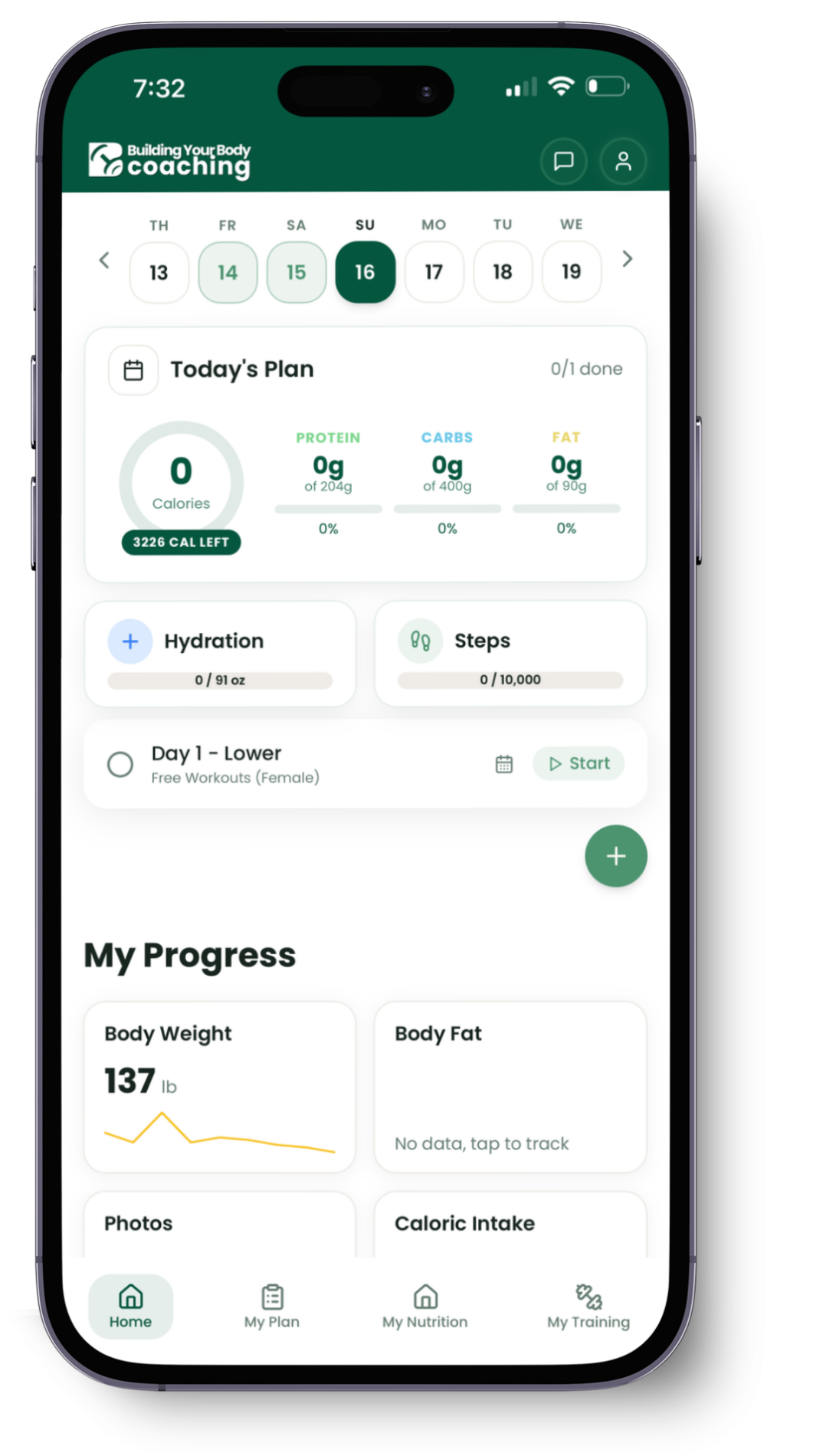
- Track nutrition with ease
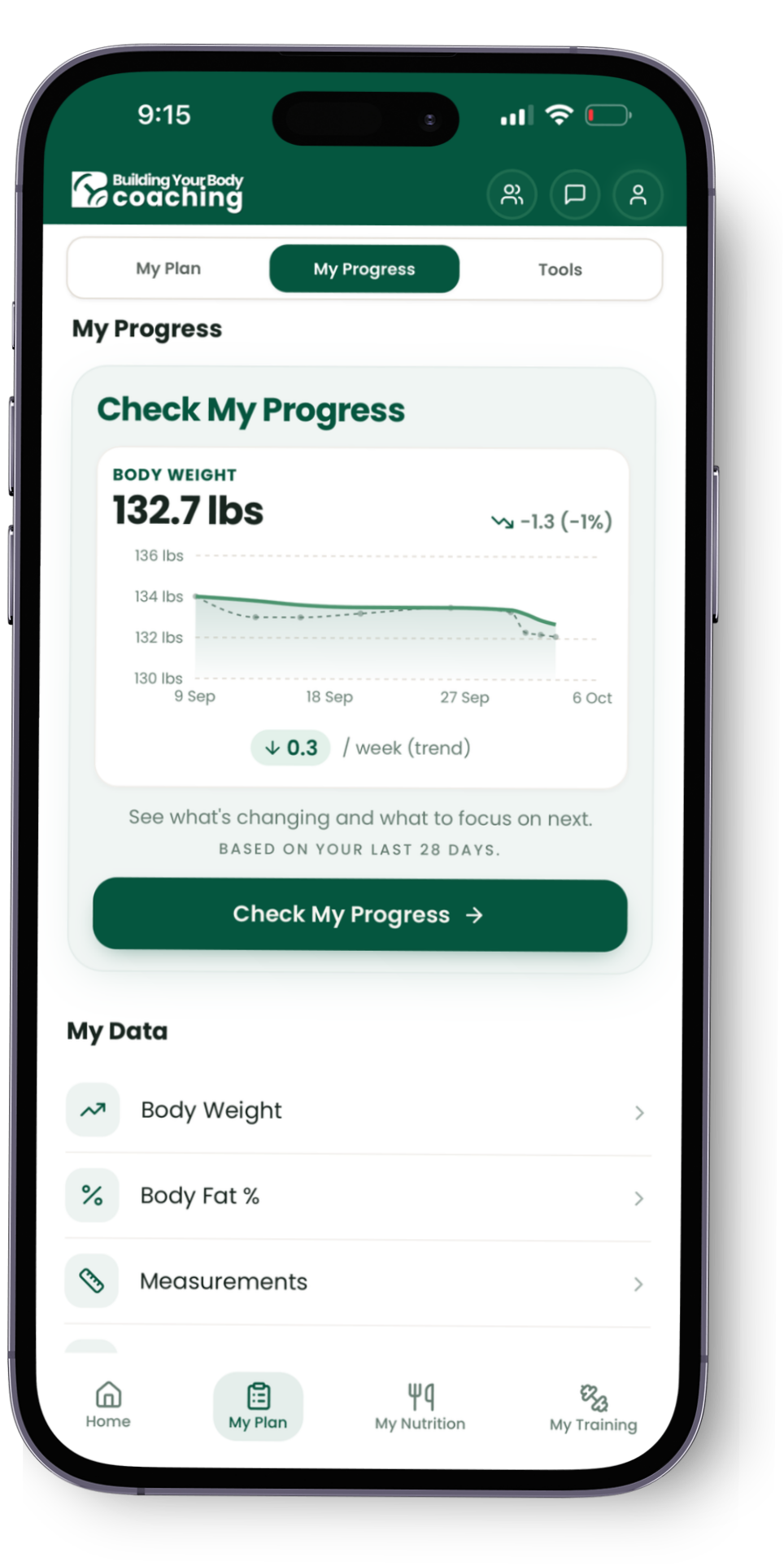
- See your progress
- Connect with a supportive community
MEET THE COACH BEHIND TEAM BYB
Meet Coach Kales

Coaching that helps you stop guessing and start making real progress.
I created Team BYB for anyone to have a clear place to track their workouts, nutrition, and progress, and clearly know what to focus on to feel their best.
A clear workout plan
Know what to do in the gym and how to make it fit your schedule and goals.
Nutrition guidance that makes sense
Get clear goals for nutrition and meals to fuel your strongest body!
Simple meal planning
Plan meals you actually like, keep the ingredients simple, and make them work for your nutrition goals.
Progress you can see and feel
Instead of just logging numbers, BYB shows you the trends behind them and what to focus on next.
Support and accountability
Get guidance, check-ins, and help staying consistent from our coaches when motivation dips or life gets busy.