Bent-Over Cable Lat Pullover
How to Do a Bent-Over Cable Lat Pullover & feel it in your lats.
The cable lat pullover is one of my favorite ways to train your lats in the stretch, but small setup changes decide where it feels hardest, and whether your triceps take over. Here's how I set up the bent-over version so your lats are challenged most with your arms overhead.
Full demo video
Bent-Over Cable Lat Pullover with a Lengthened Bias

Watch me walk through the attachment, where to stand, the torso angle and the mistakes that pull your triceps into it.
What makes this a lengthened bias
The cable lat pullover mainly targets your lats. There are several ways to set it up, and changing your body position or how far you stand from the cable changes where the exercise feels hardest, also called the resistance profile.
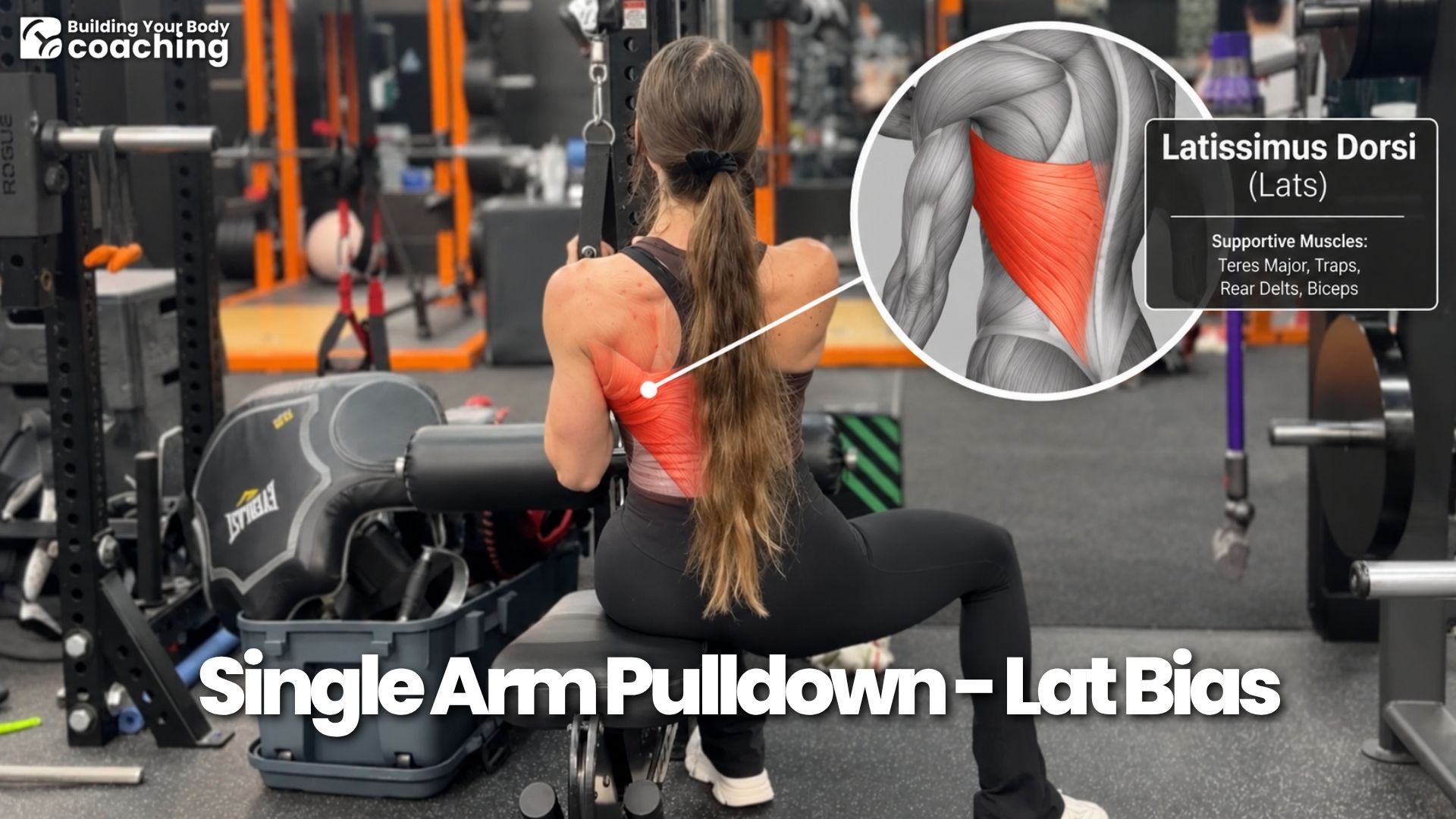
Your lats are one of the largest muscles in your upper body. They start along your lower back and ribs and run up and out to attach to your upper arm. Their main job is pulling your arm down and in toward your torso and hips.
In this bent-over setup, the cable creates the most tension with your arms overhead, when your lats are fully stretched. That's the hardest part of the rep, and training in that lengthened range is great for building muscle. As you pull your arms down toward your body, it gets a little easier, though it'll still feel heavy.
Equipment: Cables
How to do it
Set the cable high. Set the pulley to a high position, taller than you.
Pick a neutral-grip attachment. Choose an attachment where your palms face each other. A neutral grip lets your thumbs turn slightly out, which tucks your elbows in and lines your lats up with the cable. I prefer single handles because they take grip out of it. A rope works well for smaller frames. If you're broader and the rope won't let your hands reach your torso, use a longer rope or clip two together. Skip the straight bar: palms-down usually flares your elbows and the bar hits your body, which cuts your range of motion.
Step back one to two steps. Stand as close to the cable as you can while still getting your arms fully extended overhead and keeping the weight stack from touching. Standing too far back shifts the tension toward the middle and end of the rep. That isn't wrong, but it isn't the goal of this variation.
Hinge to about 45 degrees. Hinge at your hips with a soft bend in your knees until your torso is at about a 45-degree angle.
Head between your arms. Keep your eyes down and your head between your arms, with your biceps in line with your ears. Hold this position the whole set, with no rocking, swinging or changing your torso angle.
Start in the full stretch. Let your arms reach overhead and your shoulder blades rise and roll slightly forward to get a deep lat stretch. Don't overreach: letting your arms drift too far overhead brings your chest into it.
Keep your ribs down. Keep your spine neutral, or even slightly rounded, with your core braced. Your hips, spine and ribcage stay still. Don't think "chest up": lifting your ribs reduces your lats' leverage and limits your range of motion.
Lead with your lats. Start each rep by squeezing your lats. Your shoulder blades pull down first, then your arms pull down toward your hips.
Elbows toward your pockets. Think about driving your elbows toward your pockets, like you're squeezing something in your armpits. Keep your arms fairly straight, with the same elbow angle the whole rep.
Finish with your arms at your sides. The rep is done when your upper arms reach your torso and your hands are by your hips. That's where your lats are fully shortened. Then return to the stretch with control.
Feeling cable pullovers in your triceps?
You're bending your elbows as you pull. This is the most common mistake. When your elbows bend, it turns into a triceps extension and the work moves away from your lats.
A little triceps is normal, but they shouldn't burn before your lats do. Fix: Keep your arms fairly straight and hold the same elbow angle from top to bottom.
You're using a straight bar. Palms facing down flares your elbows and the bar runs into your body, which shortens the rep and shifts work away from your lats.
Use single handles or a rope with your palms facing each other.
Common form mistakes
Pulling your arms behind your body.
Your lats can't pull your arm behind your torso, so going past your sides shifts the work to your rear delts. Fix: Stop the rep when your upper arms reach your torso.
Swinging, rocking or arching your back.
Extra body movement takes tension off your lats. Fix: Lock in your 45-degree hinge, keep your ribs down and core braced, and let only your shoulders move.
Standing too far from the cable.
You lose the tension in the stretch at the top, which is the point of this variation. Fix: Step back only one to two steps, as close as you can while keeping the stack from touching.
Reaching too far overhead.
Letting your arms drift too far brings your chest into the movement. Fix: Get a deep lat stretch at the top, but don't overextend.
Bent-over cable lat pullover form checklist
- Cable set high, taller than you
- Neutral-grip handles or rope, palms facing each other
- One to two steps back, stack not touching
- Hinge to about 45 degrees, soft knees
- Head between your arms, biceps by your ears
- Ribs down, core braced, no "chest up"
- Start in a deep stretch overhead
- Shoulder blades down first, then arms
- Elbows toward your pockets, same elbow angle
- Stop with your upper arms at your sides
- No swinging or rocking
Questions
Why do I feel cable lat pullovers in my triceps?
Usually because your elbows bend as you pull, which turns it into a triceps extension. Keep your arms fairly straight with the same elbow angle the whole rep, and lead by pulling your shoulder blades down.
What attachment is best for cable lat pullovers?
One that lets your palms face each other. I prefer single handles because they take grip out of it. A rope works for smaller frames, and you can use a longer rope or clip two together if you're broader. A straight bar tends to flare your elbows and hit your body.
How far should I stand from the cable for lat pullovers?
About one to two steps back, as close as you can while still getting your arms fully overhead and keeping the weight stack from touching. Standing farther back shifts the tension away from the stretch.
What does lengthened position bias mean?
It means the exercise is hardest when the muscle is most stretched. In this setup, that's with your arms overhead, when your lats are fully lengthened.
Should I keep my chest up during lat pullovers?
No. Lifting your chest arches your spine, reduces your lats' leverage and limits your range of motion. Keep your ribs down and your core braced.
How far down should I pull on a cable pullover?
Until your upper arms reach your torso and your hands are by your hips. Your lats can't pull your arms behind your body, so going farther brings in your rear delts.
Every exercise in BYB comes with a demo like this.
Follow your workout plan
Coach-built programs with a demo for every exercise.