
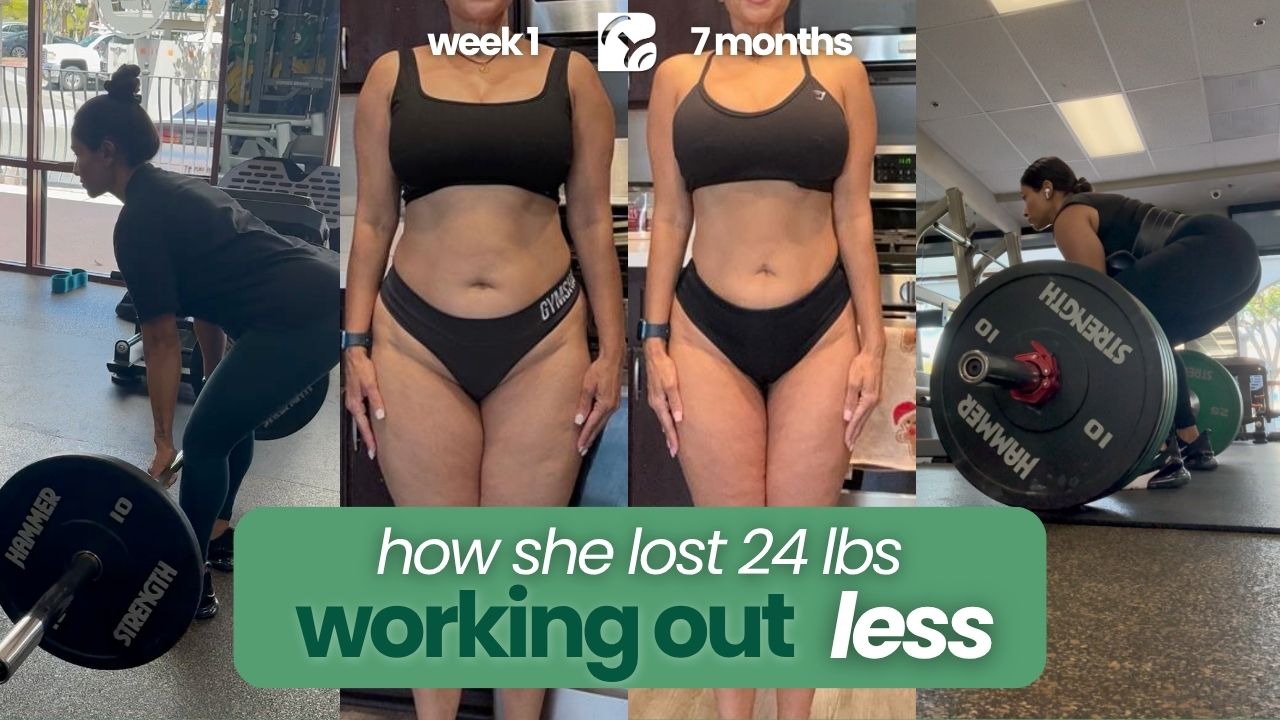
How a Mom With Hypothyroidism Lost 24 Pounds in 7 Months by Working Out Less
Hiral was stuck at the same postpartum weight for over a year while training five days a week. Here's how fewer, smarter workouts and a real nutrition plan helped her lose 24 pounds.
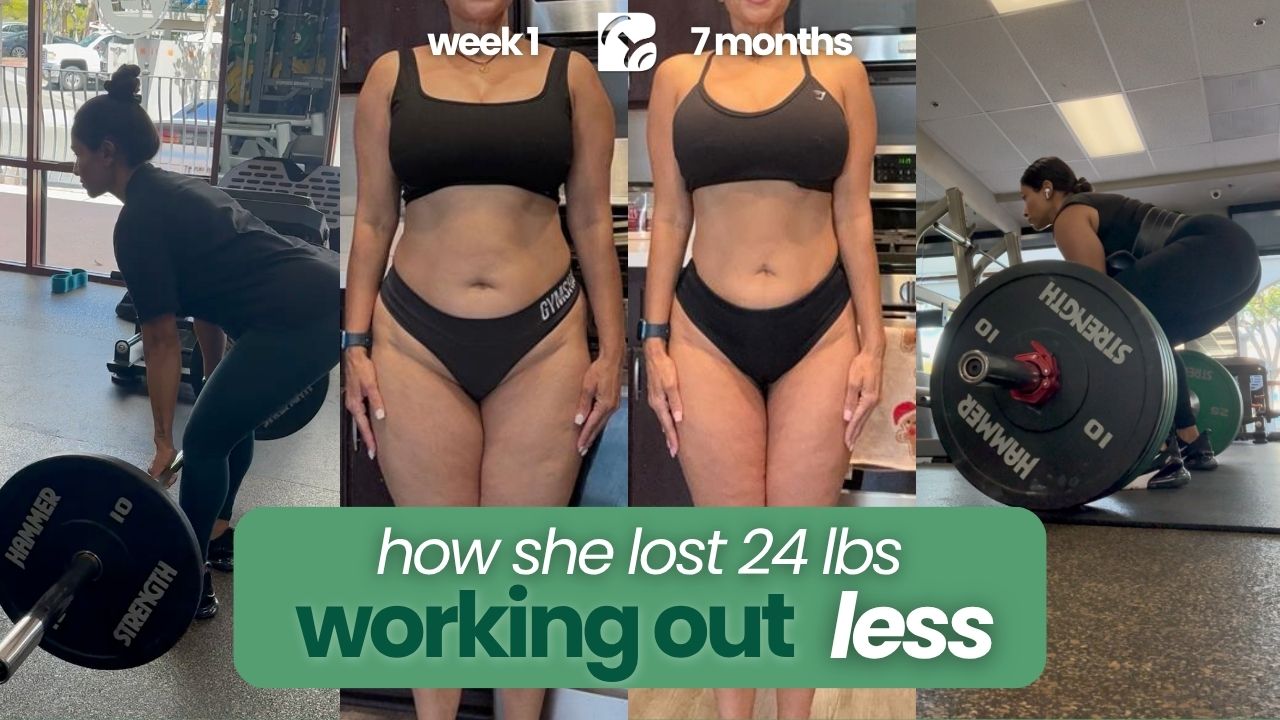
This client came to us after being stuck at the same postpartum weight for over a year.
She was working out five days a week, doing 45+ minutes of cardio every single session, and still wasn't seeing the progress she wanted. Seven months later, she had lost 24 pounds, and she was actually working out less.
This is the story of how a busy mom navigating weight loss with hypothyroidism stopped just doing more and started focusing on what actually works.
If you've ever felt like you're giving everything you've got and getting nothing back, you very likely will be able to relate to her story.
Why She Was Struggling to Lose Weight
If effort could be measured, hers was maxed out.
She's a full-time mom raising her 2-year-old son, and her days were busy, unpredictable and centered around taking care of everyone else. On top of that, she was navigating hypothyroidism, insulin resistance and an elevated A1C, and her doctor constantly reminded her about that A1C.
She wanted to lose the 20 pounds she'd gained after having her baby. But despite everything she was doing, the scale hadn't moved in over a year. And she was exhausted from trying.
It was clear to me pretty quickly that her goal was bigger than a number. She wanted to:
Feel confident in her body again
Enjoy vacations instead of feeling self-conscious
Wear a swimsuit and actually feel good in it
Have more energy and presence with her son
Feel proud of the effort she was putting into herself instead of guilty
She didn't just want to weigh less. She wanted to feel like herself again.
Working Out Five Days a Week Wasn't Getting Her Results
She Was Already Doing "Everything Right"
On paper, she was doing what most people assume postpartum weight loss requires. She was working out five days a week, doing 45+ minutes of cardio every workout, and trying hard to eat healthy.
But she was spending a huge amount of time in the gym without progress. She was tired, frustrated and increasingly disconnected from her body. She even felt guilty for taking "so much time" out of her day for the gym, even though she knew how important her health was.
So what was going wrong?
Every time she walked into the gym, she was essentially doing more of the same. She was following workouts from fitness influencers, doing a lot of cardio and trying to eat "healthy," but there wasn't a clear strategy connecting any of it back to her actual goal.
This is where I see a lot of women get stuck. When the results don't come, the instinct is to do more: more workouts, more cardio, less food, more restriction. she would tell me, "Oh, I can't eat that, I would get so fat," talking about carbs.
What almost nobody stops to ask is: is what I'm doing actually working? For her, after more than a year, the answer was pretty clearly no. So instead of handing her another five-day split and telling her to add even more cardio, we went in the opposite direction.
We Reduced Her Workouts to Three Days a Week
The first thing we changed was her training. We took her from five days of workouts down to three structured strength-training sessions per week.
Yup, three! Most of my clients only train three to four days a week.
Why would we reduce her workouts? Because more training isn't automatically better. Her goal wasn't to burn as many calories as possible. Her goal was to lose body fat, build muscle and change the way her body looked. She had already tried the "burn as many calories as possible" strategy for a year, with no results.
Three strategic sessions gave us enough training stimulus to build muscle & make progress, without forcing her to live in the gym. It also gave her more time to recover, get her steps in, and be present with her son.
Instead of jumping from one random workout to another, she had a structured plan that let us track her progress and challenge her a little more over time. That's one of the biggest differences between working out and strength training:
Working out is movement. Strength training is a strategy.
If you want to see what a structured split looks like, our 4-day upper/lower workout plan is a good example of training with a plan instead of guessing.
Why We Replaced Excessive Cardio With Daily Movement
Forty-five-plus minutes of cardio every workout is a LOT of time to spend on something that wasn't getting her closer to her goal.
To be clear, cardio wasn't the problem. The amount of cardio just wasn't serving the goal. So we took the excess out and replaced it with a realistic daily step goal, something she could hit while she was out and about with her son.
That gave her a way to stay active throughout the day without spending another hour in the gym. And honestly? It was a huge relief for her. She was already feeling guilty about how much time she spent exercising. Now she had less time in the gym, a clear activity target, and more intention behind everything she did.
This is a big part of how to lose weight without excessive cardio: keep moving, but stop treating the treadmill as the only tool you have.
The Nutrition Changes That Supported Her Progress
She was trying to eat healthy, but "eating healthy" and eating in a way that supports your specific goal are not the same thing.
This might be the part of her story that surprises you most. When she came to me, she was eating around 1,000 calories a day with very few carbs. She was aggressively undereating while trying to train five days a week with 45+ minutes of cardio each time.
Here's what one of her days looked like when we started:
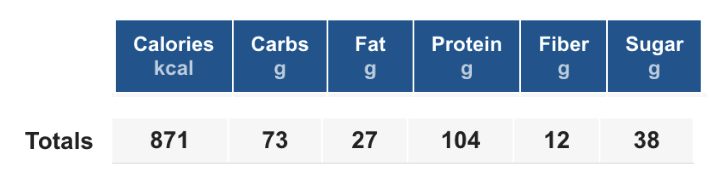
One day of her food log when we started: 871 calories.
She didn't need to eat less. She had that maxed out. So instead of cutting further, we increased her calories so she could actually fuel her training.
I know what you're thinking: "She wanted to lose weight, and you gave her MORE food?" Yes. 😂 But we weren't just adding calories and sending her on her way. We changed what she was doing with them, and we built her plan around foods she actually liked and could realistically prepare as a busy mom. No surviving on chicken and broccoli.
Her plan also had to take into account the health factors she was navigating, including weight loss with insulin resistance and her elevated A1C. Every person's needs are different here, which is exactly why a plan that fits you beats a generic one. If you want to understand your own numbers better, a nutrition and macro tracker makes it much easier to see what you're actually eating, and our guide on how much protein you really need is a good place to start.
Why Strength Training Became the Priority
She wasn't trying to "burn calories" anymore. Her new program was built around intentional strength training and creating a real muscle-building stimulus.
That meant no more rushing through a circuit and then hopping on the treadmill for another 45 minutes. We focused on:
Progressive strength training
Proper exercise selection
Training with intention
Creating enough stimulus to build and maintain muscle
Actually recovering from her training
The goal was no longer to see how much she could sweat. The goal was to give her body a reason to change. You can't just keep adding cardio and hope your body magically becomes more muscular. If this is new to you, read why progressive overload matters for muscle growth.
More Food + Better Training = A Completely Different Approach
This is where the pieces came together. More fuel meant she could train with real effort instead of just getting through her workouts, and purposeful strength training gave her body a reason to use that fuel.
Her nutrition wasn't just about eating more. Her training wasn't just about working out less. The two worked together, alongside her daily steps and recovery. That's a completely different approach from "eat as little as possible and exercise as much as possible," which is the trap so many women fall into.
This is the heart of body recomposition for women: losing body fat while building muscle, instead of just chasing a smaller number. Our guide to body recomposition explains it in more detail.
The Results: 24 Pounds Lost in Seven Months
After being stuck at the same postpartum weight for more than a year, she finally started seeing the scale move. Not because we added more, not because she spent more time in the gym, and not because of an extreme diet.
She lost 24 pounds in seven months, while working out less.
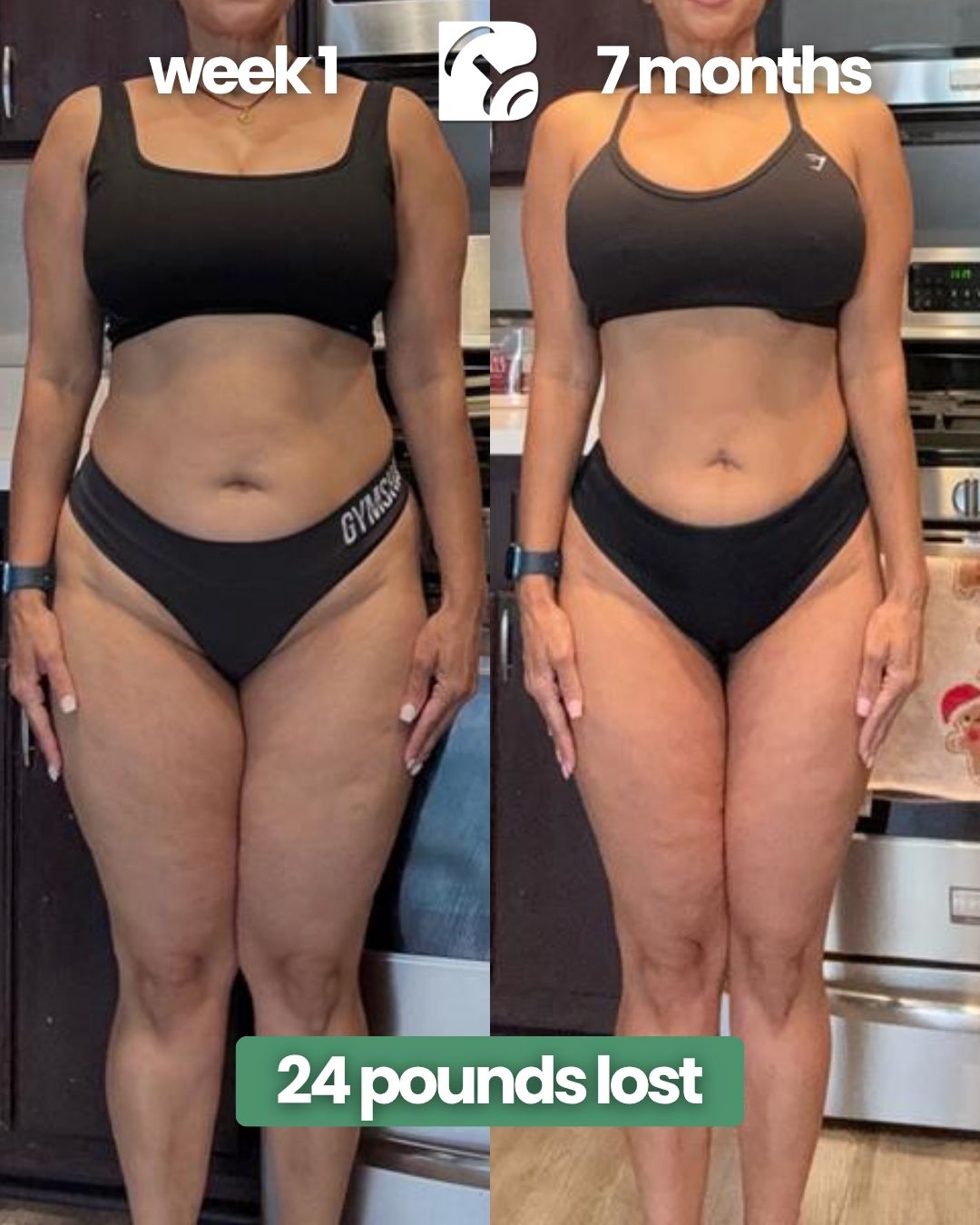
And the changes weren't just on the scale:
She started feeling more confident in her body.
She looked forward to vacations instead of worrying about how she'd feel in a swimsuit.
She started wearing shorts again.
She had more time and energy for her son.
She felt proud of the effort she was putting into herself instead of guilty about it.
Honestly, that last part is what I think matters most in this hypothyroidism weight loss transformation ☺️
What This Transformation Teaches Us About Sustainable Weight Loss
Her story is a great example of why more isn't always better.
She didn't need five workouts a week. She didn't need hours of cardio. She didn't need to keep restricting harder. She needed a structured approach to strength training, nutrition and daily activity that made sense for her body, her circumstances and her life.
It got her out of a cycle I see all the time: "I'm not getting results → I need to do more → I'm exhausted → I can't keep this up → I feel guilty → I try even harder."
Her story isn't about doing less and magically losing weight. It's about doing what matters most and cutting the things that weren't helping. That's what sustainable fat loss for women can look like. Not more punishment, not more restriction, not more hours in the gym. Just a better strategy, one that fits your life and that you can actually maintain.
note: this is one client's experience, not a guaranteed outcome, and everyone's body responds differently. Her coaching worked alongside her own medical care. Nothing here treats, cures or reverses hypothyroidism, insulin resistance or A1C. If you have a medical condition, talk with your doctor before changing your diet or exercise routine.
How BYB Fitness Can Help You Build a More Structured Routine
The foundations that helped her (structured strength training, realistic daily movement, enough food to fuel your training, and consistency over restriction) are the same foundations we build into BYB Fitness.
With the BYB Fitness app, you can:
Follow structured strength-training programs written by coaches
Log your workouts and track weights, reps and sets with a workout tracker
See your progressive overload over time, so you know you're actually getting stronger
Track your nutrition and macros
Track your bodyweight and progress
Get support from a real coach through Online Group Training or 1:1 Coaching
Getting results doesn't always mean working out more or eating less. Sometimes you just need a better plan.
BYB Fitness helps you take the guesswork out of strength training, nutrition and tracking your progress, so you can spend less time wondering what to do and more time actually making progress.
Want a coach to build your plan around your life, like we did with her?
Frequently asked questions
Ready for a plan that fits your life?
Choose self-guided training, join group coaching, or work with Coach Kales 1:1.
Start TodayRelated articles
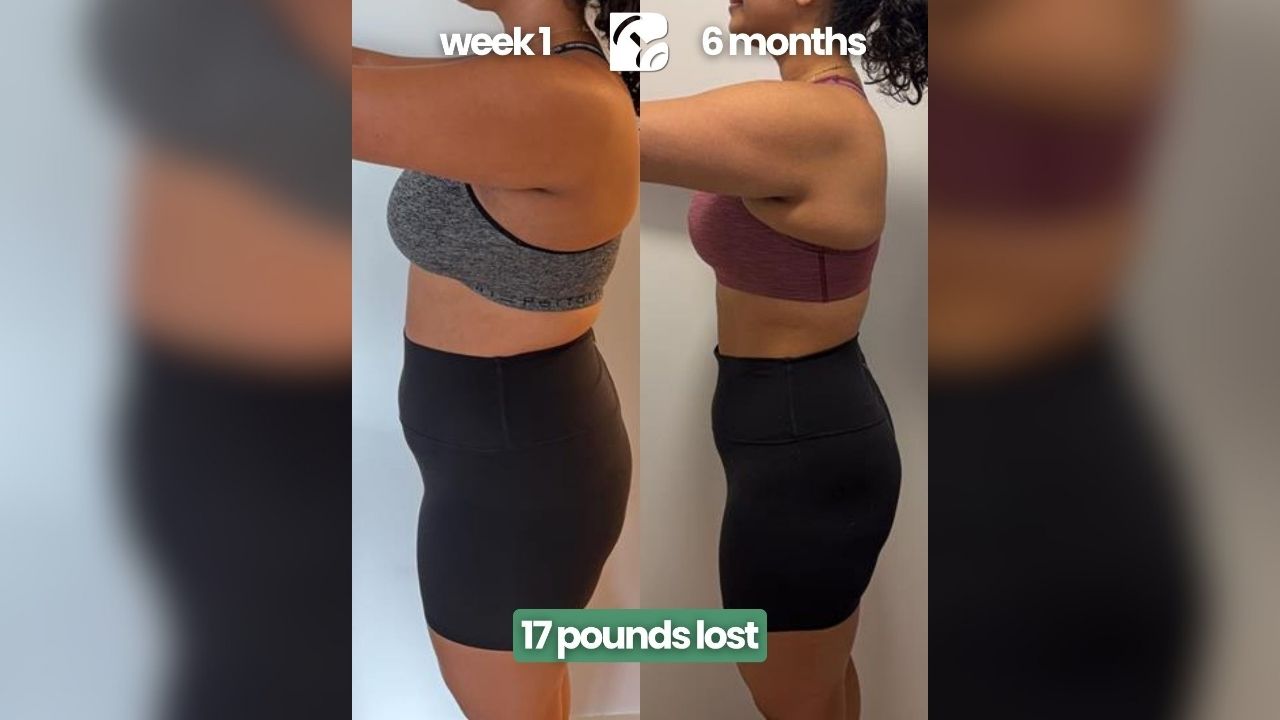
How a Director of Strategy Lost 17 Pounds While Traveling for Work and Eating Out on Weekends
She traveled for work, ate out on weekends and trained just three days a week. Here’s how a busy Director of Strategy finally lost the weight, and kept her social life.