Smith Machine Hip Thrust
How to Do Smith Machine Hip Thrusts & feel them in your glutes.
Learn how to set up the Smith machine hip thrust, maximize glute engagement, and avoid common mistakes with this step-by-step exercise tutorial.
Full demo video
Smith Machine Hip Thrust Video Tutorial
Follow along as Coach Kales breaks down the Smith machine hip thrust, including proper bench positioning, foot placement, core bracing, and how to get the most out of every rep.
Why I Love Smith Machine Hip Thrusts for Glute Growth
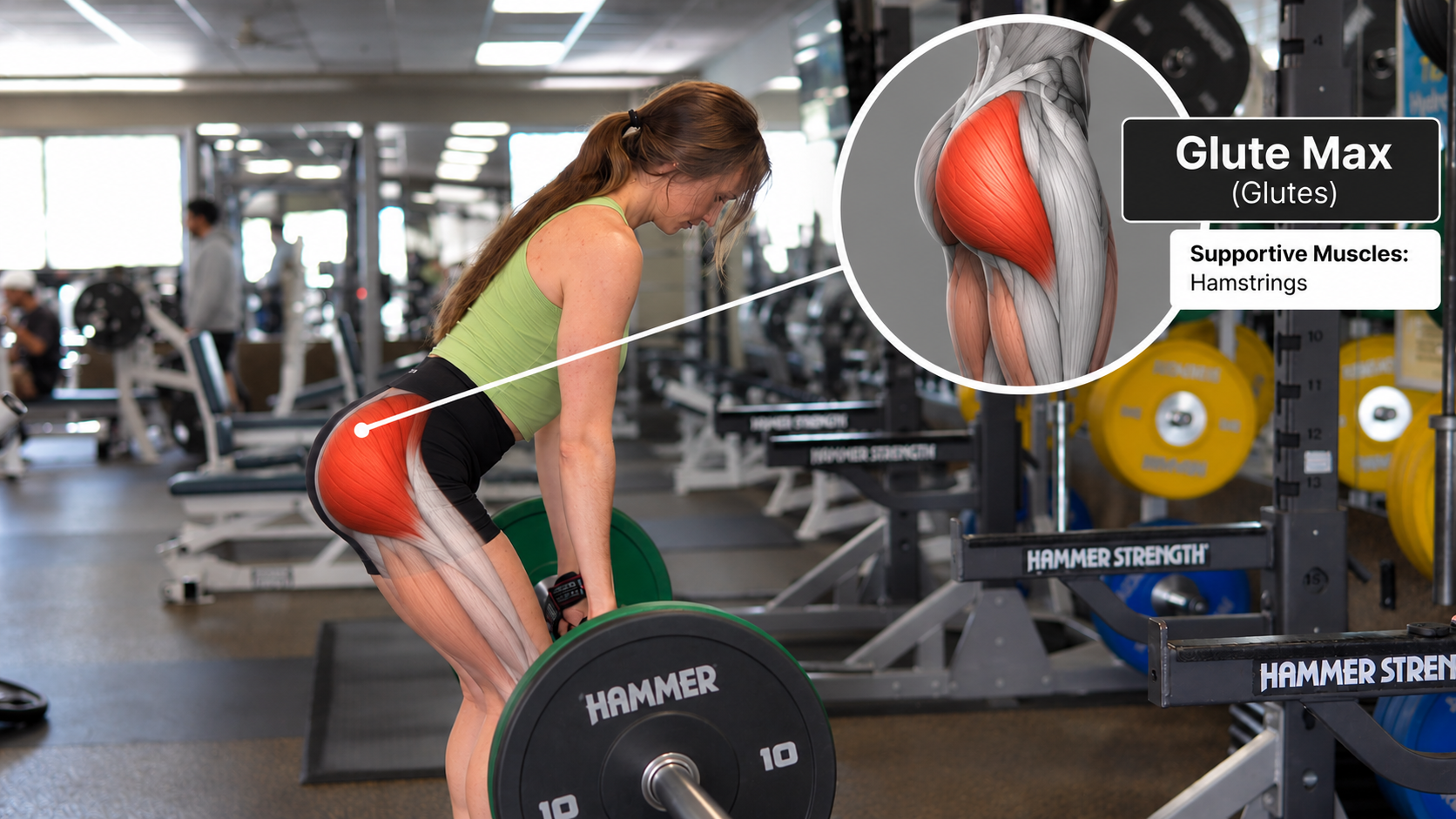
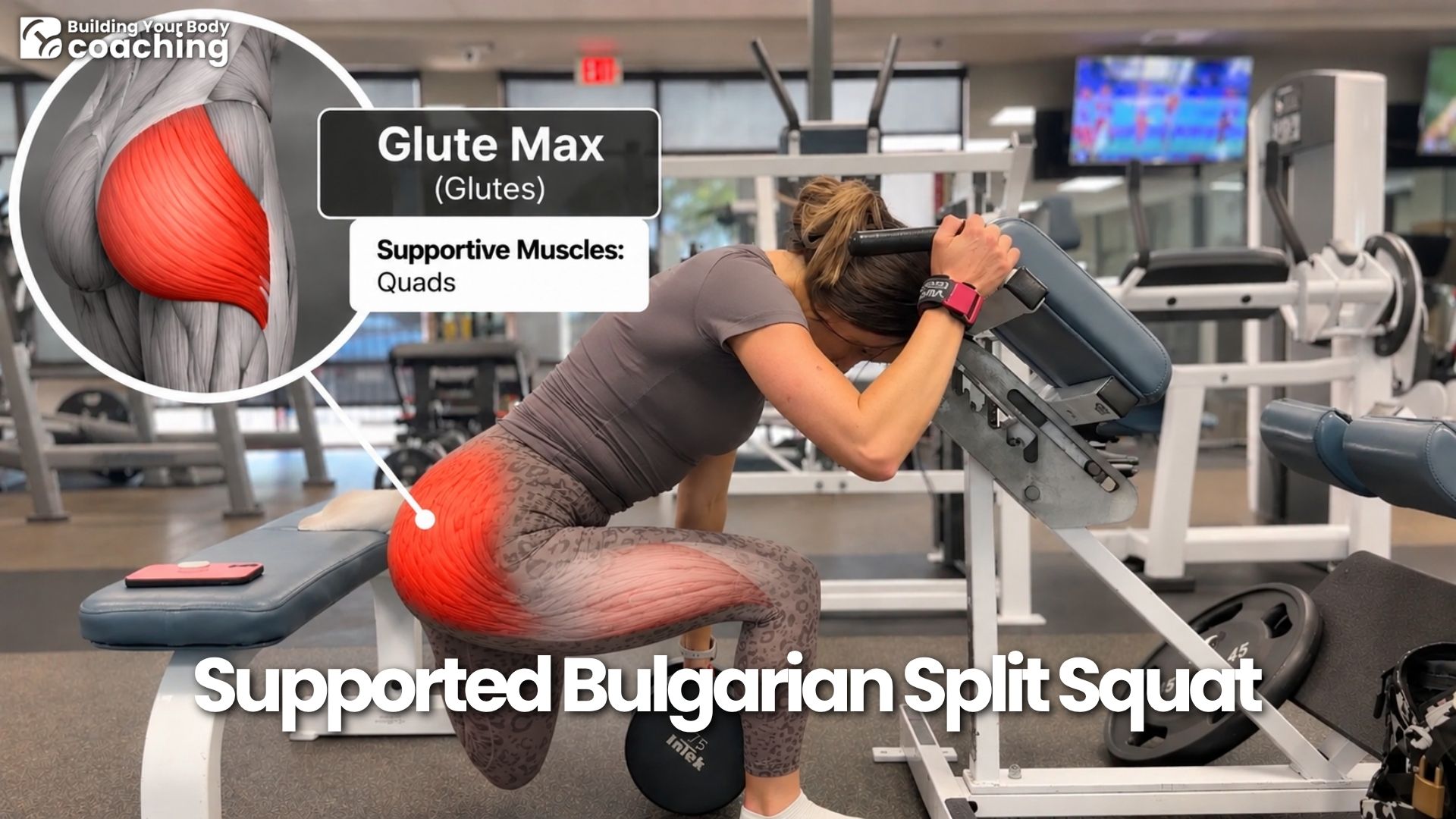
The Smith machine hip thrust is a glute-focused exercise that primarily trains the gluteus maximus, the largest of the three glute muscles.
It's one of my favorite ways to hip thrust because the fixed bar path gives you extra stability. Instead of balancing a free barbell, you can focus on producing force through your hips. That makes it easier to feel your glutes working, progressively overload the movement, and keep your technique consistent from week to week.
The movement is all about hip extension, and it's hardest near the top, when your hips approach full extension and your glutes are in a shortened position. The Smith machine hip thrust is generally considered a shortened-position-biased exercise for exactly that reason.
Muscles worked: the gluteus maximus is the prime mover, extending your hips and driving the weight up. The gluteus medius helps stabilize your hips and pelvis, the hamstrings and adductors (especially the adductor magnus) assist with hip extension, and your core keeps your torso and pelvis steady. Your glute medius and minimus aren't switched off here; they just play more of a stabilizing role than the maximus.
The glute max does most of the work here: it is the main hip extensor. That extra stability often means more output and more constant tension on your glutes than a free barbell hip thrust. The hardest point is the top lockout, when your hips are fully extended.
Equipment: Smith machine, a stable knee-height bench or box, and a thick barbell pad.
How to do it
Setup 1: Choose the right bench height. Use a stable bench or box roughly knee height. If it's slightly too tall, elevate your feet on a secure, stable platform. At the top, your shoulders, hips and knees should form roughly one straight line. If you can't find a bench that lines up, pick something slightly taller and raise your feet on plates or a small box.
Setup 2: Position the bench beneath the Smith machine. Lower the bar to a good starting height and place the bench so the bar sits comfortably across your hip crease when unracked. Bench distance varies with torso length and machine design. Start with the bar about bench height. With a longer torso, move the bench farther from the machine; with a shorter torso, bring it closer.
Setup 3: Add a barbell pad. Use a thick barbell pad to reduce pressure across your hips.
Setup 4: Position your upper back. Rest your upper back on the bench with the edge just below your shoulder blades, around sports-bra-band height.
Setup 5: Set your feet. Feet about shoulder-width apart, flat, toes generally forward. At the top, aim for roughly vertical shins, knees stacked over ankles, about 90 degrees of knee bend, and knees tracking in line with toes. Adjust slightly for your anatomy and comfort.
Unrack the bar. Lift slightly and rotate the bar to clear the Smith machine hooks. Let the padded bar settle comfortably into your hip crease.
Brace your core and stack your torso. Before you move, bring your ribs down, lightly tuck your pelvis (a slight posterior tilt) and brace your abs. The goal is to extend your hips without compensating through extra lower-back arch. Keep your core engaged for the whole set so you reach full hip extension without using your lower back.
Lower with control. Hinge at the hips to lower. Your upper body and head move together as one unit, pivoting over the edge of the bench. Avoid excessive spinal movement. Lower slowly.
Drive through your entire foot. Push through your whole foot, keeping contact through your heel, midfoot and forefoot, and squeeze your glutes to drive your hips up. Don't let your toes lift as you push your hips toward the ceiling.
Reach full hip extension. At the top: a straight line from shoulders to hips to knees, ribs down, abs tight, chin gently tucked. Squeeze your glutes without arching your lower back.
Pause and repeat. Pause for about 1–2 seconds at the top, lower under control, and repeat. Don't bounce out of the bottom.
4 common Smith machine hip thrust mistakes
What each one looks like, and the fix.
Not reaching full hip extension.
Lighten the load if needed and finish in a straight line from knees to hips to shoulders.
Arching your lower back instead of extending your hips.
Stack your torso: ribs down, pelvis lightly tucked, core braced.
Feet too far forward (more hamstrings) or too close (more quads).
Adjust until your shins are about vertical at the top.
Looking up and extending your neck.
Keep your chin tucked and let your head follow your torso. Think slight double chin.
Go deeper
Mistake #1: Not reaching full hip extension
Stopping short of full extension cuts off the top of the range of motion, which is exactly where this exercise is most challenging. Common causes are using too much weight, losing core control, and inconsistent positioning. Reduce the load if necessary and focus on reaching a straight line from knees to hips to shoulders without overextending your spine. Going heavy and missing full extension once in a while is OK, but for most of your training, lower the weight if you can't lock out. Push your ribs down and brace.
Mistake #2: Arching your lower back
Excessive lumbar extension usually shows up as flared ribs and a big lower-back arch at the top. It can shift the movement away from the hip-extension pattern you're after. My cue is "stack your torso": bring your ribs down, lightly posteriorly tilt your pelvis and brace your core, so your upper body moves as one stable unit instead of repeatedly flexing and extending through your spine. If you feel it more in your low back than your glutes, this is likely why. Imagine a board along your torso, with your head and eyes following your chest, so the only movement comes from your hips.
Mistake #3: Incorrect foot positioning
Feet too far forward may increase the sensation of hamstring involvement. Feet too close may increase quadriceps involvement. Adjust your stance until your shins are approximately vertical at the top, and treat the 90-degree knee position as a practical starting point rather than an absolute rule. If you feel it mostly in your hamstrings, bring your feet a little closer. If it's mostly in your quads, move them a little farther away, until your shins are vertical at the top.
Mistake #4: Looking up and extending your neck
Looking up and cranking your neck back can make it harder to keep the head and torso position you want. Keep your chin gently tucked and let your head follow your torso as it pivots over the bench. Think slight double chin. You can't properly brace your core while looking up.
How to feel Smith machine hip thrusts more in your glutes
1. Check your foot position. 2. Make sure you're reaching full hip extension. 3. Keep your ribs stacked over your pelvis. 4. Reduce the load if your technique is breaking down. 5. Use a brief pause at the top. 6. Keep every rep controlled. And remember: feeling an exercise in a specific muscle isn't the only sign that your training is working. Consistent technique and progression over time matter more.
Smith machine vs. barbell hip thrusts
Smith machine: fixed bar path, less demand for balancing the bar, simpler setup and execution, and useful for consistent progressive overload. Free barbell: freer movement path, more independent stabilization, lets you adjust the bar path naturally, and is also effective for glute hypertrophy. Both can build glute muscle. The best choice depends on your equipment, comfort, individual mechanics and training preference.
How to program Smith machine hip thrusts for glute growth
Use them as a primary glute exercise in a lower-body or glute-focused session. A good starting point: 3–4 sets of 8–12 reps, 2–3 minutes of rest, about 1–3 reps in reserve on most working sets, and add reps or load over time while keeping your technique. Because this exercise emphasizes the top of hip extension, it pairs well with exercises that challenge your glutes at longer muscle lengths, like Romanian deadlifts (see the RDL guide linked below) or split squats.
Smith machine hip thrust form checklist
- Bench positioned just below the shoulder blades
- Bar padded and aligned with hip crease
- Feet approximately shoulder-width apart
- Shins vertical at the top
- Ribs down and core braced
- Chin gently tucked
- Drive through the entire foot
- Fully extend the hips without arching the back
- Pause briefly at the top
- Lower with control
Questions
Are Smith machine hip thrusts good for glute growth?
Yes. They load hip extension, the gluteus maximus's main job, and the stable bar path makes it easy to add weight or reps over time, which is what drives muscle growth.
Where should my feet be during Smith machine hip thrusts?
About shoulder-width apart, flat on the floor, with toes generally forward. Set them so your shins are roughly vertical and your knees are bent about 90 degrees at the top, then adjust slightly for comfort.
Why do I feel Smith machine hip thrusts in my lower back?
Usually because you're finishing the rep by arching your lower back instead of extending your hips. Bring your ribs down, lightly tuck your pelvis, brace your abs, and reduce the load if you can't reach the top without arching.
Should I tuck my chin during hip thrusts?
A gentle tuck helps. Letting your head follow your torso makes it easier to keep your ribs down and your upper body moving as one unit. Think slight double chin, not pressing your chin into your chest.
How high should the bench be for Smith machine hip thrusts?
Roughly knee height, with the edge sitting just below your shoulder blades. If the bench is a bit tall, raise your feet on a secure, stable platform.
Are Smith machine hip thrusts better than barbell hip thrusts?
Not better, just different. The Smith machine removes the need to balance the bar and simplifies setup, while the barbell allows a freer bar path. Both build glutes, so choose based on your equipment, comfort and preference.
How many sets and reps should I do for Smith machine hip thrusts?
A solid starting point is 3–4 sets of 8–12 reps with 2–3 minutes of rest, stopping about 1–3 reps short of failure on most working sets. Progress by adding reps or weight while keeping your form.
Should I squeeze my glutes at the top of every rep?
Yes. Aim for a brief 1–2 second pause at full hip extension while squeezing your glutes, without arching your lower back. Then lower under control.
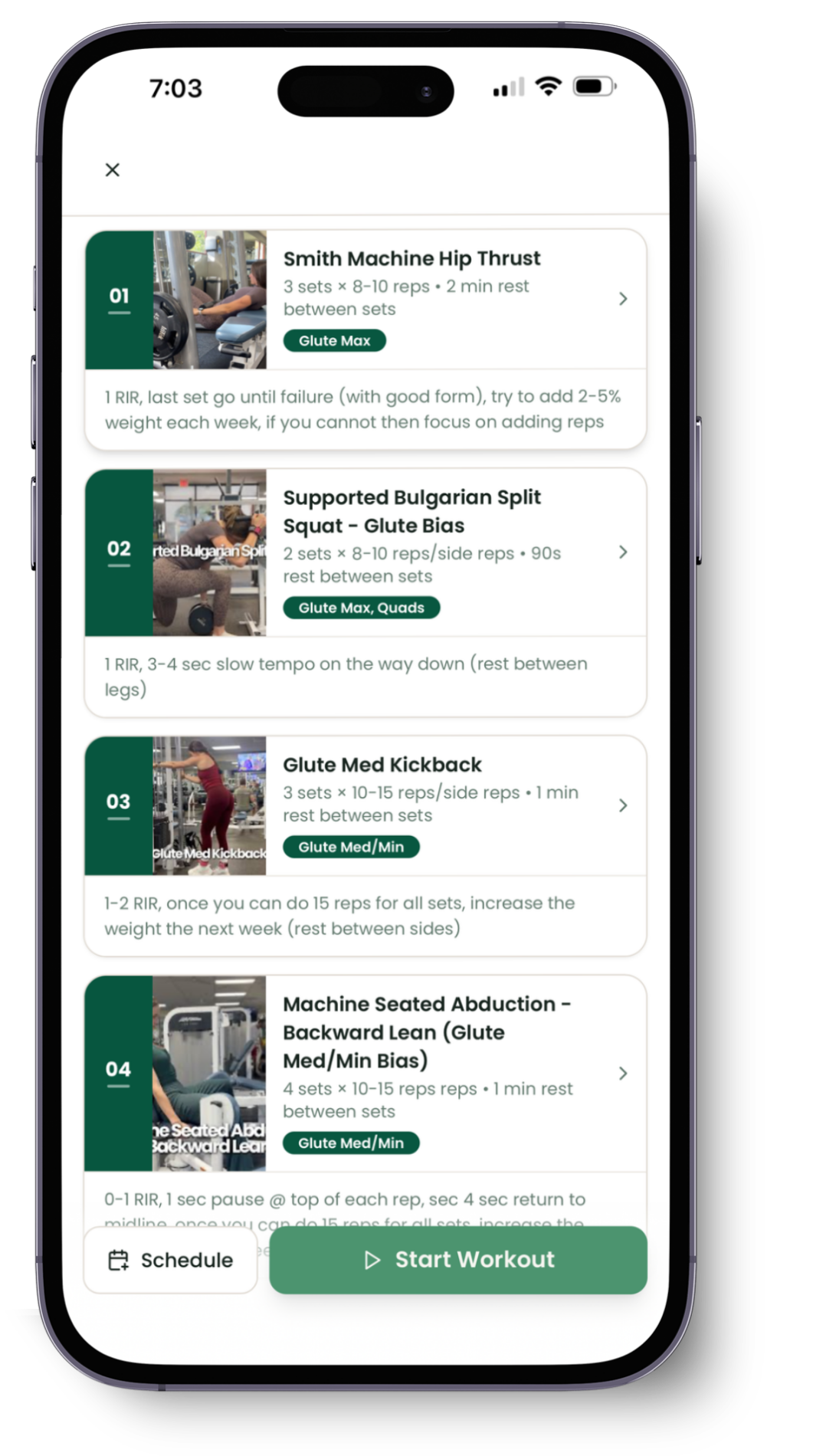
Every exercise in BYB comes with a demo like this.
Follow your workout plan
Coach-built programs with a demo for every exercise.